October 13, 2021

COFFEE CAKE


I quite miss the baking marathons that I used to get involved with. There was the "Children in Need" cake stall at work which raised £150 the first time we did it and over £2,000 the last time it was held.  You can read how we we went about raising so much money here.

Then there was the Loire Valley Cake Club that I formed and ran for several years until it evolved into something more like a lunch club.  

I have enjoyed making cakes for various other events in France over the years, but all of these opportunities to indulge in baking seem to have dried up due to the pandemic and other things.  So, when I discovered that my dad's assisted housing unit was holding a coffee morning in aid of the Macmillan cancer charity, (albeit in the afternoon) I thought I would bake them a couple of cakes. 

Thinking that it would probably be mostly the elderly residents themselves attending I decided to go traditional and went for a ginger cake using the Be-Ro book recipe (see here) and a coffee cake.  Also thinking that I didn’t want to be responsible for mishaps with anyone’s dentures I went for a recipe I had had my eye on for a while that contained no hidden chopped nuts!  The only nuts were to be the walnut halves decorating the top which were clearly visible!  It comes from the W.I. book "Cakes" by Liz Herbert.

The ladies in the office seemed thrilled when I presented them with the cakes.  As I breezed through the lobby later in the afternoon the place was joyfully ringing with the sound of tinkling teacups and laughter. My two cakes seemed to be the only home made ones on display and Jo from the office beamed as she showed me that they were almost sold out already.  Hmmmmm…..put a home made cake next to a pack of shop bought offerings and there's no contest!

I was disappointed that my dad didn't want to attend.  When I went upstairs to his flat to get him he said "do I have to?" and that was that.  Looking after the needs of a very old person is the hardest thing I have ever had to do in my life I think.  All that fun going on downstairs and he prefers to doze in front of yet another repeat of Dad's Army all by himself.  Tragic.  Oh well, whatever makes him happy.

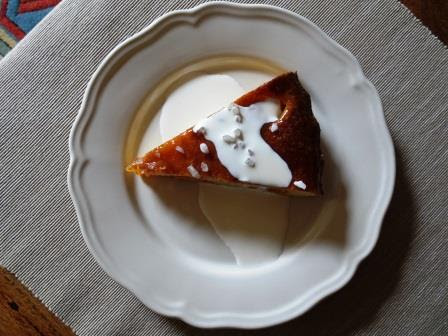
I didn’t get to try the cake myself but it did look good so I made it again for visitors at home the next week.  It was a delicious cake!  Very simple to make and the coffee glacé icing looked very chic as an alternative to my usual slathering of buttercream!

Just out of interest.........for ages I wondered why so many American recipes for coffee cake contained no coffee at all.  Well, it seems that "coffee cake" is the American term for any sort of cake that you would have with your coffee.  Simple !!

Ingredients

For the cake

175g soft margarine or baking spread

175g soft light brown sugar

175g self raising flour

½ tsp baking powder

3 eggs

2tsp instant coffee granules or powder dissolved in 1 tbslp boiling water

For the buttercream*

40g softened butter (I used Sainsbury's Buttersoft)

80g icing sugar, sifted

1 tsp instant coffee granules or powder dissolved in 1 tsp boiling water

For the glacé icing*

115g icing sugar, sifted

1½ tsp instant coffee granules or powder, dissolved in 1½ tblsp hot water

walnut or pecan halves to decorate (optional)

Method

Butter and line two 20cm sandwich tins.  Preheat the oven to 180°C/ 160° fan / gas mk 4.

Put all the cake ingredients except for the coffee liquid into a large bowl and whisk or beat together until smooth and well combined.  Add the coffee and mix well until incorporated.

Divide the mixture between the two tins, level the top and bake for 25 minutes until done.  Cool in the tins then transfer to a wire rack to cool completely.

To make the buttercream, beat the butter until light and smooth, gradually beat in the icing sugar then the coffee liquid.

To make the glacé icing, place the icing sugar in a small bowl, make a well in the centre and gradually beat in enough of the coffee liquid to give a smooth, spreadable consistency.

When the cakes are cool, place one on a plate or stand and spread the top with the buttercream.  Place the other cake on top, spoon the glacé icing into the middle and, using a spatula, knife or back of a spoon, gently spread outwards almost to the edge.  Decorate with the halved walnuts or pecans.

*I amended the amount of water used to dissolve the coffee granules compared to that in Liz Herbert's original recipe.

Cuts into 8-10 slices.

October 11, 2021

SMOKED MACKEREL SOUP (soup maker recipe)


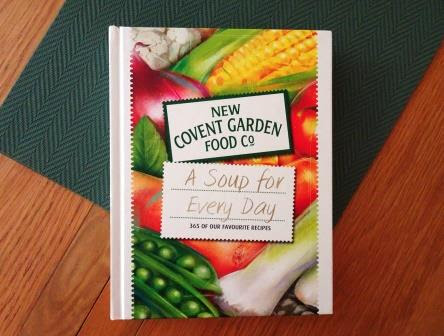
I stumbled across a copy of the Covent Garden soup recipe book in a charity shop the other day.  We like their soups, a favourite of ours being their smoked haddock chowder.

Almost any hot soup recipe can be adapted for the soup maker and as I hungrily devoured the pages of the book looking for ideas for I spotted the recipe for our favourite soup.  That's when I remembered the pack of smoked mackerel fillets in the fridge.  I had bought them while we were in France, intending to make some paté (which you can read about here) for my birthday bash (which you can read about here) but ran out of time.  (Who knew that putting up bunting could take so long?!)  We brought them back to the UK with us and by now they were heading for the wrong side of their use by date so I thought "why not?".

By jove it was tasty!  I considered using the chunky setting to get the real chowder effect but instead settled on smooth, reserving some of the flaked fish to add in once cooked.*  That turned out to be a mistake because of the annoying little bones, so next time I think I would put all the fish in the machine, cook on smooth and add a few bits of diced cooked potato at the end instead. 

Anyway, if you're a fan of smoked fish you would love this soup!  I have to say that the flavour was quite intense.  It would probably have been flavourful enough with only one of the fillets, not both, which I will also try next time.  Apart from the fish stock pot I didn't add any extra seasoning as the fish itself was peppered and is quite salty.

Ingredients

A twin pack of peppered smoked mackerel fillets

2 medium/largeish potatoes

2 large carrots

1 fish stock pot (I used Tesco own brand)

1 large knob of butter,

Milk to thin the soup when cooked

Method

Remove the skin from the fish, break into large flakes, reserving a few for later. *

Peel and roughly chop the veg, preparing enough to fill the machine to the lower line when added with the flakes of fish.  Add the stock pot, butter and enough water to fill to the upper line.  Process on smooth.

When cooked, thin with milk to get the thickness you prefer, stir in a few small flakes of the reserved fish and serve.

*See notes in text.

Makes four generous portions.

October 1, 2021

APRICOT CLAFOUTIS - things to do with apricots part two and a real bargain.


A clafoutis is a very popular dessert in France.  It's basically fruit baked in a batter and can be served warm or cold, spooned out of the dish or served in slices.  I decided to make one using some more of my gorgeous apricots.

For this clafoutis I used my new dish.  It's a Le Creuset gratin dish that I bought at a "vide maison" for 2€.  A real bargain.  A vide maison is a house sale, where people set out tables of unwanted items in the garden or courtyard, sometimes with prices on but mostly open to negotiation. 

There are fewer charity shops in France than in the UK (where every town now seems to have several different ones).  In France it seems that people hang on to their old stuff and store it in the hope of selling it at a "vide grenier" or a "brocante" - the French equivalent of the car boot sale, or antique fair.  I am constantly amazed at the optimism of the sellers as they painstakingly arrange stuff on the tables that frankly I would have taken to the tip long ago!  Some of it clearly comes out year after year in the hope that eventually someone will pay a euro or two for it.  Empty perfume bottles for example.  And old shoes, still with their original boxes.  French houses obviously have plenty of storage space -  outbuildings, cellars or attics where boxes of old junk can be stored - along with empty boxes for shoes and electrical items, in the expectation that one day box and discarded item will be reunited to be put for sale at a vide grenier or a brocante. 


In France many villages host one or two of these events each year.  Usually the roads through the village are closed to traffic and tables are set up along the streets for people to display their unwanted stuff.  Sometimes it's on the village playing field or in the village hall.  During the pandemic last year there were virtually none.  This year there have been a few but with all the uncertainty many villages have not got around to organising anything.  Consequently  householders have been holding their own "vide maison" instead.  We came across several on our travels and spotted a small hand written notice for one at a house in our nearest village, which is where I swooped upon my bargain Le Creuset dish.

My new dish is in that classic bright orange colour that Le Creuset have been doing for years called "volcanic" - which is pretty much the same as the colour of my apricots.  It's in immaculate condition and the seller actually had three of them.  I can't for the life of me now think why I didn't buy all three, as at 2€ each I could have then given the other two to friends who also would have loved to have one.  Once again I can hear René Artois saying "you stupid wooman!".


I used my favourite clafoutis recipe which you can see on Susan's blog here.  Having tried several other recipes which have all worked fine, I find I mostly come back to this one.


You can use virtually any fruit to make a clafoutis.  Cherries would be traditional but apricots are very good.  I have recipes for banana, prunes soaked in brandy and caramelised apple clafoutis in this blog (see the index).  You can dust it with icing sugar before serving if you like.


We had ours warm with cream.  Leftovers are lovely served cold or warmed through, with cream, ice cream, or even, as has been known in our UK house, custard - usually the instant variety!

Ingredients

5-7 apricots, depending on the size of your dish
50g plain flour
50g ground almonds
100g caster sugar
½ tsp vanilla extract
2 eggs
250ml plain yoghurt, buttermilk or a mixture of youghurt and whole milk

Method

Preheat the oven to 180° C / 160° fan.  Butter the dish.

Wash the fruit.  Cut each apricot in half, remove the stone then cut each half in half.  Arrange the quarters in the dish.

Put all the other ingredients into a bowl and whisk together with an electric whisk or hand blender until you have a smooth batter.

Pour the batter carefully over the fruit and bake for 30-40 minutes until firm and golden brown.

Serve warm or cool, dusted with icing sugar if you like, in slices or spoonfuls, with cream, ice cream, or just on its own.

Serves 4-6 people.

September 28, 2021

APRICOT PIE - things to do with apricots part one and my own tarte tatin moment.

One of the things we love so much about France is the availability of fruit and veg that sometimes have a fairly short lived supply in the UK.  In the French markets and supermarkets during August there are often mountains of apricots for sale.  Usually loose, sometimes prepacked in punnets and often in large trays.  They are hard to resist.  Then when I get them home I have to think what to do with them.

With guests coming for dinner I decided to make an adaptation of one of my recent favourite desserts to a Mary Berry recipe.  Part way through I had a senior moment.

I used the recipe for an apple brioche pudding which I have made before.   It's one of those recipes that is very adaptable and always turns out well.  If you make it right it has a distinct "patisserie" look to it. 


The basic idea is that you line the dish with sliced brioche which forms a nice base for the tart.  Then you spread a frangipane mixture on top and arrange the fruit over it.  After baking you glaze it with an apricot jam glaze.

I realised something was not quite right as I shut the oven door.  Looking at the pie through the glass I muttered "you stupid woman"  in the fashion of René in Allo, Allo (a favourite expression in my kitchen these days) as it dawned on me what I had done wrong.  I clearly had not been concentrating as I carefully arranged the fruit on the brioche base and spread the frangipane mixture on top instead of the other way round!

Still, it looked good when I took it out of the oven so I shrugged, glazed it with the apricot jam as usual and scattered a few bits of crushed sugar on top for a bit of glamour.  As I brushed the warmed jam over the top I couldn't help thinking of the other famous culinary mistake of the Loire Valley, the Tarte Tatin.  The story goes.........well, you can read about it here.


It was still delicious!

The last four slices came in handy the next day when we were invited to an impromptu alfresco lunch at the house of some other friends - another of the things I love about our life in France.  (Impromptu alfresco lunches are an uncommon event in the UK!)  They had phoned to say the weather was perfect for lunch outdoors (which it frankly hadn't been for some time)  and they had made a quiche but hadn't got a dessert.  So I took the last of my pie. 

If you would like to make it, see my blog post here and simply put the frangipane mixture on top of the fruit, not underneath !!

Cuts into 8-10 generous slices.

September 18, 2021

YELLOW SOUP, with a vibe of cauliflower cheese (soup maker recipe)


We are now in our last few days of our three month stay in France.

We have had a wonderful time.  It's been hard work getting the house and garden back in order after such a long time away - ten months.  The weather has also been very mixed, in fact rather more English than French at times, cool and showery.  


A mists and mellow fruitfulness kind of morning on the day of my birthday party.
You can read about it here.

However, come September we had a return to warmer weather and the month turned into the very reason why it is my favourite time to be in France in the whole year.  Warm days, misty mornings and cool nights, just perfect.


As always, eating out was often unplanned.  That last minute invitation to lunch with friends or the temptation of the menu du jour on a shopping trip.  The result of which is a fridge full of uneaten food and need to be inventive when using it up instead of throwing it away.  

Enter stage left the £4 cauliflower*.  I kid you not!  Fruit and veg seem to be so much more expensive in France than in the UK now and sometimes I balk at the prices but when you're sick of carrots, who can resist a big, fresh cauli?  Hence it would have been criminal to throw any of it away and with half of it looking slightly less fresh in the fridge - time to bring out the soup maker!


I have got into the habit of writing down the ingredients I used each time I make soup so that I can make it exactly the same again if it turns out really well.  Which this one did - and it was bright yellow!


The Emmental cheese was ready grated and from one of those ubiquitous and much maligned bags found in every French supermarket.  We love it and like horses for courses it's perfect for certain things, one of them being this soup.  I stirred it in at the end of cooking and as it didn't melt completely there were flecks of the cheese in the soup - an added bonus, IMHO.

* By the way, one week later we bought another cauliflower of a similar size from the same supermarket for 1.89€ !!  (About £1.60, much more sensible!)

Ingredients

half a cauliflower
2 - 3 medium carrots
1 onion
1 large potato
1 vegetable stock pot
1 tblsp olive oil flavoured with rosemary
1 splash of Worcestershire sauce
salt and pepper to taste
2 heaped tablespoons grated Emmental cheese

Method

Prepare all the veg by washing / cleaning, peeling as appropriate and cutting into chunks.  Prepare enough to fill the machine to the lower line.

Add water to the upper line, then the oil and seasoning and cook on smooth.

Stir in the cheese as soon as the soup is cooked.

Makes four generous portions.

September 3, 2021

GREEN SOUP (soup maker recipe)


On one of my first shopping expeditions after arriving in France I spotted a soup maker at a bargain price in a shop called Zodio.  It was 32€ so around £28.  I was so chuffed with it that I used it straight away and then offered to get another one for my friend.  The second one I got was reduced even further in price to 26€, so around £23 and even more of a bargain!  No wonder that even in the middle of July there were only three left on the shelf!

It's more or less the same as my Morphy Richards model which I have in my UK kitchen, but without the time display on the control panel.  It did however come with a handy jug!


The weather has been fairly English since we arrived in France, often quite cool, so the soup maker has come into its own several times.  It's also a handy way to use up the inevitable random selection of unused veg.  

One of the things I like about both my soup makers is that the end result is often a bit of a surprise and on this occasion the soup turned out to be a vibrant green colour.  I have no idea why as there were no peas or green veg in it at all!  It was, as usual, delicious!

Ingredients

4 medium carrots

1 onion

1 small leek

1 chunk celeriac

5 mushrooms

2 medium potatoes

one third of an orange pepper

1 veg stock pot

1 tblsp garlic flavoured oil

1 splash Worcestershire sauce

salt and pepper

Method

Wash, peel and prepare the veg and cut into medium chunks.  Use enough to fill the machine to the lower line.  

Add the other ingredients and enough water to fill to the upper line and set to smooth.

I hadn't any bread in the house so served mine with garlic flavoured croutons.

Makes 4 good portions.

September 1, 2021

THE Be-Ro BOOK and their dates of publication.


The 40th and 38th editions.

I have a small collection of old Be-Ro books including the one I bought for myself in the 1970's and a couple of very early editions of my mum's and grandma's.  I updated my collection by buying the 40th edition a few years ago in a supermarket where they were sold with the flour.  Copies of the current edition (41st) can be purchased directly from Be-Ro via their website.  To do that click here.

I naively thought at one time that it might be fun to collect every one ever published but have noticed that they can now fetch a hefty price on Ebay.  Consequently I don't think my collection will grow much more, unless I stumble across one or two in a charity shop somewhere.  That's now less likely as charities are more wise to the value of things than they used to be owing to their volunteers being more internet savvy!


The 21st and 26th editions.

Be-Ro books were first published in 1923, a century ago, and are an interesting insight into social history.  Looking at the earlier editions they were clearly written for the stay-at-home wife and her daughters, right up to those published in the 1970's.  Since then they have become less housewifely.  Over the decades well loved recipes have gradually been changed and new ones added to meet modern tastes and appetites as well as fashions in food.

The older editions can be difficult to date as they don't show the date of publication in them.  Many of the early ones don't have an index either.  As the Be-Ro book was originally published as a helpful booklet to go with the bags of flour that's not surprising.  

Recently I decided to try to find out when one of my mum's favourite recipes, the one for rich coconut tartlets, first appeared in a Be-Ro book - the recipe book she usually used.  I wrote about the tartlets here and then set about finding how far back they first appeared in a Be-Ro book.

I have a copy of the 17th edition where they don't appear and the 21st edition where they do (I don't have any of the editions in between) but typically neither copy has the date of publication.  So I wrote to Be-Ro to ask them.  To my absolute amazement I had a quick reply from Be-Ro with a full list!  So, it was as simple as that, all I had to do was ask!  

It seems my mum's favourite recipe first appeared somewhere between 1954 and 1958, which does make sense.  Being married in 1950 it seems logical that she would have first made them some time between those dates.


The 17th and 32nd editions.

You might also like Karen's blog, Lavender and Lovage, where Be-Ro recipes are often featured.


~~~~~~~~~~~~~~~~~~~~~

Here is the list of publication dates as given to me by Be-Ro:

1st 1923
2nd 1924
3rd 1925
4th 1926
5th 1926
6th 1928
7th 1929
8th 1930
9th 1931
10th 1932
11th 1933
12th 1947
13th 1948
14th 1949
15th 1951
16th 1953
17th 1954
18th 1955
19th 1956
20th 1957
21st 1958
22nd 1959
23rd  1960
24th  1961
25th 1962
26th 1963
27th TBC
28th TBC
29th TBC
30th TBC
31st 1967
32nd 1967
33rd 1972
34th 1975
35th 1978
36th 1980
37th 1982
38th 1988
39th 1992
40th 1999
41st & Current Edition 2009